
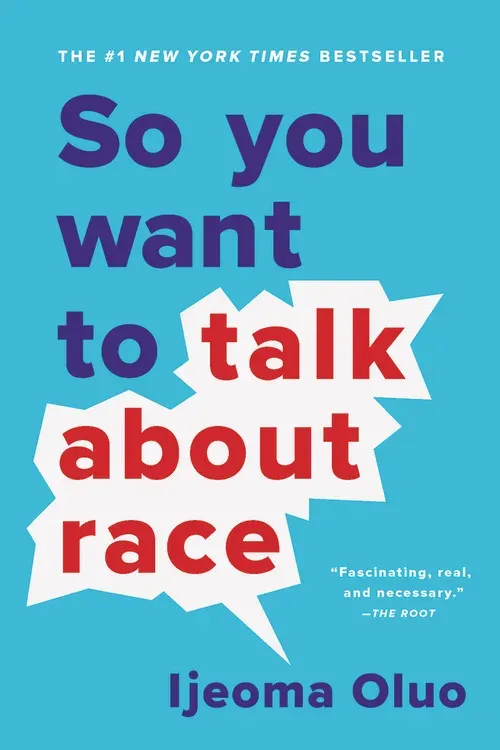
So You Want to Talk About Race
Now I have enough information to write the comprehensive overview.
Overall Summary
Ijeoma Oluo's So You Want to Talk About Race is a guidebook for navigating conversations about race in America, addressing topics that many people find uncomfortable, confusing, or frightening. Published in 2018 and catapulted to renewed prominence following George Floyd's murder in 2020, the book became a #1 New York Times bestseller and essential reading for individuals, workplaces, and institutions grappling with racial injustice.
Oluo, a Nigerian-American writer raised by a white single mother in Seattle, brings both personal experience and analytical rigor to her subject. Each chapter is framed as a question she has been asked repeatedly in her work discussing race: "Is it really about race?" "What is privilege?" "Why can't I touch your hair?" "What is the school-to-prison pipeline?" This structure makes the book accessible as both a cover-to-cover read and a reference for specific situations.
The book's central argument is that racism in America is systemic, not merely individual. Oluo defines racism as prejudice backed by institutional power, which means racism isn't just about individual bad actors but about systems that consistently disadvantage people of color while benefiting white people. This framing shifts focus from personal feelings and intentions to outcomes and structures.
Oluo writes with directness, wit, and personal vulnerability. She shares painful childhood memories of being called slurs, describes navigating predominantly white workplaces and educational institutions, and reflects on conversations with her own white mother about race. These personal stories ground abstract concepts in lived experience, making the book feel intimate rather than academic.
The book provides practical guidance for both white people and people of color. For white readers, Oluo offers strategies for having productive conversations without causing additional harm: how to listen, how to apologize when you make mistakes, how to recognize defensiveness, and how to move beyond talk to action. For readers of color, she validates the exhaustion of constantly explaining racism and provides language to articulate experiences that can be difficult to express.
Oluo acknowledges that conversations about race are uncomfortable, but she argues that discomfort is not a valid reason to avoid them. Black people and other people of color cannot escape racial dynamics; asking white people to sit with discomfort is asking far less than what people of color endure daily. The stakes of these conversations are too high for comfort to be the priority.
The book concludes by insisting that talking is not enough. Oluo calls readers to action: examining their own participation in racist systems, using privilege to advocate for change, supporting organizations led by people of color, and holding institutions accountable. Understanding racism intellectually matters, but dismantling it requires ongoing commitment and effort.
High-Level Overview: Key Arguments and Goals
Racism Is Systemic: Racism isn't just individual prejudice but a system of power that advantages white people and disadvantages people of color across every institution in American society. Understanding this allows focus on systemic change rather than individual moral judgment.
Defining When It's About Race: If a person of color thinks something is about race, or if an issue disproportionately affects people of color, or if it fits into broader patterns that disadvantage people of color, it is about race. This principle challenges attempts to dismiss racial concerns.
Privilege Requires Acknowledgment: White privilege doesn't mean white people don't struggle; it means race isn't one of the things making their lives harder. Checking privilege means examining how advantages shape your perspective and limit your understanding of others' experiences.
Intersectionality Matters: People hold multiple identities that interact in complex ways. A Black woman's experience differs from both a Black man's and a white woman's. Effective anti-racism must consider how race intersects with gender, class, sexuality, disability, and other dimensions.
Historical Context Explains Present Systems: Contemporary racial disparities in policing, education, employment, and other domains have historical roots. Understanding this history reveals how current systems perpetuate inequality even without explicitly racist intent.
Conversations Require Care: Productive conversations about race require setting intentions, managing emotions, doing research, avoiding oppressive arguments, reflecting on defensiveness, and prioritizing the comfort of marginalized people over your own.
Talk Must Lead to Action: Understanding racism is necessary but insufficient. Real change requires examining personal complicity, advocating in institutions, supporting affected communities, and accepting that this work is ongoing.
Introduction: A Life Marked by Race
Oluo opens by establishing her credentials: a Black, queer woman raised by a white single mother in Seattle, she has navigated race her entire life. She describes growing up in predominantly white spaces, constantly being marked as different, and learning to celebrate Black culture while enduring its costs in a white supremacist society.
The internet age, Oluo argues, has changed conversations about race. Black people can now document their experiences, find community, and demand accountability in ways previously impossible. Videos of police violence have validated what Black communities always knew. White people can no longer plausibly deny the existence of systemic racism.
Yet these conversations remain difficult. White people often feel uncomfortable, defensive, or afraid. People of color feel exhausted, angry, and traumatized. Both sides may feel the conversations go nowhere. Oluo wrote this book to provide a framework for moving through this difficulty productively.
She emphasizes that this is not a book about making everyone nicer to each other. While interpersonal kindness matters, the real goal is systemic change. American society, from its economy to its legal system to its educational institutions, was built on racial hierarchy. Dismantling that requires more than good intentions.
Chapter 1: Is It Really About Race?
Many people respond to racial concerns by insisting the issue is really about class, or individual behavior, or something other than race. Oluo pushes back: the question isn't whether race is the only factor but whether race is a factor.
Oluo provides a framework for determining when something is about race. It is about race if a person of color thinks it is about race. It is about race if it disproportionately affects people of color. It is about race if it fits into broader patterns that disadvantage people of color.
This framework challenges the common deflection that improving conditions for poor people generally will address racial inequality. Poverty affects Black and white Americans differently. A poor Black child and a poor white child face different obstacles, even if both face poverty. Race shapes how people are treated in the job market, the criminal justice system, the healthcare system, and beyond.
Race itself is a social construct, created not to describe biological differences but to justify hierarchy. The concept of race was invented to rationalize slavery and colonialism. It has no scientific basis, but its social consequences are profound and real.
Chapter 2: What Is Racism?
Oluo recounts an argument with a friend who insisted that calling someone's demeaning comments about welfare recipients "racist" was too strong. The friend wanted to reserve "racist" for extreme acts like Nazi atrocities. This disagreement revealed fundamentally different understandings of what racism means.
Oluo defines racism as prejudice against a person because of their race when that prejudice is reinforced by systems of power. This definition moves beyond individual attitudes to focus on how racial bias becomes embedded in institutions. It's not just about whether someone "means" to be racist but about the effects of actions and policies.
This definition also addresses the question of "reverse racism." Can Black people be racist against white people? Oluo argues that while anyone can hold prejudice, racism as she defines it requires systemic power to enforce that prejudice. In American society, that power flows in one direction. Individual Black people can be prejudiced, but they don't have the institutional backing to make that prejudice systematically consequential.
Understanding racism this way opens doors to systemic change. If racism is just about bad individuals, the solution is changing hearts one at a time. If racism is systemic, the solution requires changing policies, institutions, and structures.
Chapter 3: What If I Talk About Race Wrong?
Oluo describes a difficult conversation with her own mother. Her mother, who raised Black children, called to share an "epiphany" about race after a conflict with a Black coworker. She assumed that having Black children gave her sufficient understanding of Black experience. The conversation that followed was uncomfortable but ultimately strengthened their relationship.
Avoiding conversations about race because you might say the wrong thing means ignoring problems that people of color can never escape. The discomfort of potentially making mistakes is far less than the discomfort of experiencing racism daily.
Oluo provides practical guidelines for productive conversations:
- State your intentions clearly. Are you trying to learn? Express concern? Understand a perspective?
- Keep emotions in check. Strong emotions can derail conversations and center your feelings over others' experiences.
- Do research beforehand. Don't expect people of color to educate you on basics you can learn independently.
- Avoid arguments that demean any group. Comparing oppressions or making generalizations undermines trust.
- Reflect on defensiveness. If you feel defensive, ask why. What's being threatened?
- Don't prioritize your own comfort. People of color aren't comfortable either.
- Set personal feelings aside. The conversation isn't about you being a good person.
- Don't prioritize being right over learning.
- Don't force people into conversations. Respect when someone doesn't want to engage.
When you make mistakes, Oluo advises: recognize when conversations are beyond repair, apologize sincerely without qualifications, focus on the core issue rather than your intentions, don't expect credit for good intentions, don't beat yourself up, and remember why the work matters.
Chapter 4: Why Am I Always Being Told to Check My Privilege?
When someone asks you to "check your privilege," they're asking you to consider how advantages you've had shape your perspective and limit your understanding of others' experiences.
Privilege doesn't mean your life is easy. It means that race, specifically, isn't making your life harder. A poor white person has class disadvantage but still has racial privilege. Privilege and disadvantage operate on multiple axes simultaneously.
Oluo explains privilege as one side of a coin, with disadvantage on the other. Or think of it as an opportunity gap. Some people start with more opportunities, not because they earned them but because of circumstances of birth.
White privilege includes not being followed in stores, not having your name used to judge your job application, not fearing routine police encounters, seeing your race represented positively in media, and countless other advantages invisible to those who have them.
Acknowledging privilege isn't about guilt. It's about recognizing that your perspective is shaped by experiences others don't share. When you understand your privilege, you can work to extend its benefits to others rather than assuming your experience is universal.
Chapter 5: What Is Intersectionality and Why Do I Need It?
Intersectionality, a term coined by legal scholar Kimberlé Crenshaw, describes how multiple forms of oppression interact. A Black woman's experience isn't simply Black experience plus woman experience; it's a distinct experience shaped by the intersection of both identities.
Oluo uses her own identity to illustrate. As a Black, queer woman, she faces specific challenges that differ from those faced by Black men, white women, or straight Black women. Effective anti-racism must account for these differences rather than assuming all people of color share identical experiences.
Intersectionality also reveals how some people within marginalized groups can have relative privilege. A wealthy Black man may face racism but not the compounded challenges of a poor Black woman. Class, ability, sexuality, immigration status, and other factors all interact with race.
Social justice movements that ignore intersectionality fail the most vulnerable. A feminism that centers white women's experiences may not address challenges specific to women of color. An anti-racism that centers Black men's experiences may not address challenges specific to Black women. Intersectionality insists that the most marginalized voices be centered.
Chapter 6: Is Police Brutality Really About Race?
Police brutality has never been racially neutral in America. Oluo traces the history: early American police forces existed partly to return enslaved people and control free Black populations. This origin shapes policing to this day.
Statistics demonstrate racial disparities: Black Americans are more likely to be stopped, searched, arrested, charged, convicted, and killed by police than white Americans, even controlling for other factors. These disparities aren't explained by higher crime rates in Black communities; they persist across contexts.
White people often struggle to acknowledge police brutality because doing so requires acknowledging their own relative safety. If police can kill Black people with impunity, what does that say about the system white people rely on? Recognizing racism in policing threatens assumptions about fairness and justice.
Oluo describes her own terror during police encounters, the knowledge that doing everything "right" offers no guarantee of safety. Her brother's hands shook during a traffic stop. This fear is shared by Black people across America, a constant weight that white Americans don't carry.
Reform requires acknowledging this history and these disparities. Better training is insufficient when the system itself was designed to control rather than serve Black communities.
Chapter 7: How Can I Talk About Affirmative Action?
Affirmative action remains controversial, but Oluo argues it's often misunderstood. It doesn't mean hiring unqualified people; it means actively working to counter biases that advantage white candidates.
Studies show that identical resumes receive different responses depending on whether the name sounds white or Black. This bias operates even among people who consciously believe in equality. Affirmative action attempts to counteract these unconscious biases.
Critics claim affirmative action is "reverse racism," but this ignores the systemic advantages white people already receive. Affirmative action isn't special treatment; it's an attempt to level a playing field that has always been tilted.
The policy isn't perfect. It can be implemented poorly, and it doesn't address root causes of inequality. But in the absence of better solutions, affirmative action remains a necessary tool for creating opportunities that would otherwise be denied.
Oluo encourages conversations about affirmative action to focus on outcomes. Does the policy increase diversity? Does it provide opportunities that wouldn't otherwise exist? These questions matter more than abstract debates about fairness.
Chapter 8: What Is the School-to-Prison Pipeline?
The school-to-prison pipeline describes how disciplinary practices in schools funnel students, disproportionately students of color, toward incarceration. Black students are suspended and expelled at far higher rates than white students for similar behaviors.
Research shows that teachers and administrators perceive Black children as older, larger, and more threatening than white children the same age. A Black child's misbehavior is interpreted as aggression requiring punishment, while a white child's similar behavior is seen as a phase requiring redirection.
These disparities accumulate. Suspensions lead to falling behind academically, which leads to disengagement, which leads to dropping out, which leads to limited opportunities, which leads to criminalization. Each step seems minor, but the cumulative effect channels Black children toward prison.
For Oluo, the deepest tragedy is the loss of childhood joy. Black children learn early that they will be punished more harshly, surveilled more closely, and given less benefit of the doubt. This awareness steals something precious.
Addressing the pipeline requires examining policies, training educators to recognize bias, providing resources for intervention rather than punishment, and questioning whether schools should involve police at all.
Chapter 9: Why Can't I Say the "N" Word?
Oluo recounts being called racial slurs as a child, sitting silently at a dinner table while white children laughed. The word carries the weight of centuries of violence, degradation, and dehumanization.
Some white people argue they should be able to use the word if Black people do. This ignores the power dynamics that give words their meaning. When Black people reclaim the word, they're taking power over something used to hurt them. When white people use it, they're wielding a weapon regardless of intention.
Free speech doesn't mean freedom from consequences. You can legally say the word, but people can also judge you for it, refuse to associate with you, and call you out. The question isn't whether you can say it but whether you should.
Oluo has a simple rule: if a word has been used to demean and oppress a group, and that group asks you not to use it, don't use it. This isn't about policing language but about respect.
Chapter 10: What Is Cultural Appropriation?
Oluo describes encountering an airport restaurant serving African-themed food in a way that felt like a caricature. The decorations and music she loved from her heritage had been "skinned and draped around the shoulders of a glorified McDonald's."
Cultural appropriation occurs when people from a dominant culture adopt elements of a marginalized culture without acknowledgment, respect, or reciprocity. The dominant group benefits from cultural elements while the marginalized group continues to face discrimination.
The problem isn't cultural exchange, which can be positive. The problem is taking without giving, profiting without crediting, enjoying the fun parts while ignoring the struggles that produced them.
Wearing a Native American headdress as a costume while Native Americans face ongoing discrimination and violence is appropriation. Learning to cook food from another culture with respect and acknowledgment is exchange. Context and power dynamics determine which is which.
Chapter 11: Why Can't I Touch Your Hair?
This question, seemingly trivial, illuminates deeper issues of bodily autonomy and racial fetishization. Black people, especially Black women, routinely have their hair touched without consent by white people who treat their bodies as curiosities.
Oluo describes the experience: the grabbing, the comments about how "interesting" or "exotic" her hair is, the assumption that her body is available for exploration. This treatment others Black people, marking them as fundamentally different and available for consumption.
The solution is simple: don't touch people without consent. If you're curious about someone's hair, you can ask politely, but recognize that they're not obligated to satisfy your curiosity. Treat Black people as full human beings with the same bodily autonomy you expect for yourself.
Chapter 12: What Are Microaggressions?
Microaggressions are the daily slights, insults, and indignities that communicate hostility or negativity toward marginalized groups. Individually, they may seem minor. Cumulatively, they create psychological damage.
Examples include: being asked "where are you really from," having colleagues assume you're less qualified, being followed in stores, receiving surprised compliments on speaking well, having your name mocked, being tokenized as the representative of your race.
White people often dismiss microaggressions as oversensitivity. But imagine experiencing these slights multiple times daily, year after year. The cumulative weight is crushing. Each individual incident may be minor, but the pattern communicates clearly: you don't belong.
Addressing microaggressions requires both awareness and willingness to change. Recognize patterns in your own behavior. Believe people when they say something hurt. Apologize genuinely. Commit to doing better.
Chapter 13: Why Are Our Students So Angry?
Young people of color have inherited a deeply unjust America despite the efforts of previous generations. They're justified in their anger.
Oluo addresses adults' tendency to police young activists' tone or tactics. Demands for "respectability" often serve to maintain the status quo rather than achieve change. Telling young people to be patient asks them to accept continued injustice.
Previous generations fought hard and achieved important victories. But the fight isn't over. Young people today face police violence, mass incarceration, educational disparities, and environmental racism. They're not being ungrateful; they're continuing the work.
Adults should support young activists rather than attempting to control them. Provide resources, share knowledge, and trust that young people understand their own circumstances and needs.
Chapter 14: What Is the Model Minority Myth?
The model minority myth holds up Asian Americans as examples of a minority group that "succeeded" through hard work and cultural values, implying that other minority groups that haven't achieved similar success are at fault.
This myth ignores the diversity within Asian American communities, many of which face significant challenges. It also ignores the specific historical circumstances that shaped different groups' trajectories. Immigration policies, for example, affected which Asian populations entered the U.S. and with what resources.
The myth functions to divide communities of color and blame Black and Latinx people for systemic disadvantages. It says: "These minorities succeeded, so if you haven't, it's your own fault." This obscures the systemic racism all people of color face.
Asian Americans themselves are harmed by the myth, which creates pressure to conform and invisibilizes their struggles. Model minority status doesn't protect against racism; it just changes its form.
Chapter 15: But What If I Hate Al Sharpton?
This chapter addresses respectability politics and tone policing. Some white people claim they would support racial justice if only Black activists were more "respectable" or less "angry."
Oluo argues this is a trap. There is no way to advocate for racial justice that white America uniformly accepts. Martin Luther King Jr. is now celebrated, but during his life, he was widely reviled. His approval rating was 33% when he was killed. The "good activists" of history were the "bad activists" of their time.
Demands for respectability serve to police Black activism rather than engage with its content. If you dismiss arguments because you don't like the messenger, you're avoiding the substance. Focus on the issues, not the personalities.
The division between "good" and "bad" Black activists is false. Either all people deserve equality, or America remains a white supremacy. There's no middle ground where some Black people are acceptable and others aren't.
Chapter 16: I Just Got Called Racist. What Do I Do Now?
Being called racist feels terrible, but Oluo urges focusing on the accusation rather than your feelings. If someone calls you racist, they're telling you that you hurt them. That information matters more than your self-image.
Resist the urge to defend yourself, explain your intentions, or list your credentials. Your intentions don't change the harm caused. Your Black friends don't make a specific action less harmful.
Instead: listen. Try to understand what happened from the other person's perspective. Ask clarifying questions if appropriate, but don't demand emotional labor. Apologize sincerely if you did cause harm, without qualifications or explanations.
Then do the work. Examine your assumptions. Educate yourself. Commit to change. Being called racist isn't an indictment of your entire being; it's information about a specific action or pattern. Use it to become better.
Everyone raised in a racist society absorbs racist ideas. The question isn't whether you've ever done something racist but what you do when you're made aware of it.
Chapter 17: Talking Is Great, But What Else Can I Do?
Oluo concludes by insisting that understanding racism is insufficient. Action is required.
Start by examining how you participate in racist systems. Where do you work? What products do you buy? What schools do your children attend? What policies do your elected officials support? You're already participating in these systems; the question is whether you're working to change them.
Use whatever privilege you have to advocate for change. Speak up in meetings when racist comments are made. Advocate for diverse hiring. Support organizations led by people of color. Vote for policies that address racial inequality. Use your voice, your money, and your time.
Commit to ongoing work, not one-time gestures. Racial justice isn't a box to check but a lifetime practice. You'll make mistakes. Keep going. The alternative is accepting a status quo that kills people.
Oluo acknowledges the emotional toll this work takes, especially for people of color. But the toll of not doing the work is higher. Change is possible. It requires all of us.
Conclusion: The Work Ahead
So You Want to Talk About Race ultimately argues that talking about race, while difficult and uncomfortable, is necessary for creating a more just society. But talk alone accomplishes nothing. The book is a starting point, not an endpoint.
Oluo provides readers with definitions, frameworks, and practical strategies. She validates the exhaustion of people of color and challenges white readers to move past comfort toward accountability. She grounds abstract concepts in personal stories that make systemic problems feel human and urgent.
The book's continued relevance reflects both its quality and the persistence of the problems it addresses. The questions Oluo answers in 2018 remain the questions Americans struggle with years later. Until systemic racism is dismantled, the conversations she facilitates will remain necessary.
The title's framing matters: "So You Want to Talk About Race." Oluo assumes good faith, that readers genuinely want to engage. She meets them where they are while pushing them further. She acknowledges difficulty while insisting it's no excuse for avoidance.
For white readers, the book offers a guide to doing less harm and more good. For readers of color, it offers validation, language, and strategies for the conversations they're forced to have whether they want them or not. For everyone, it offers a vision of what's possible when we stop avoiding discomfort and start doing the work.