
Cracking the PM Career
Overall Summary
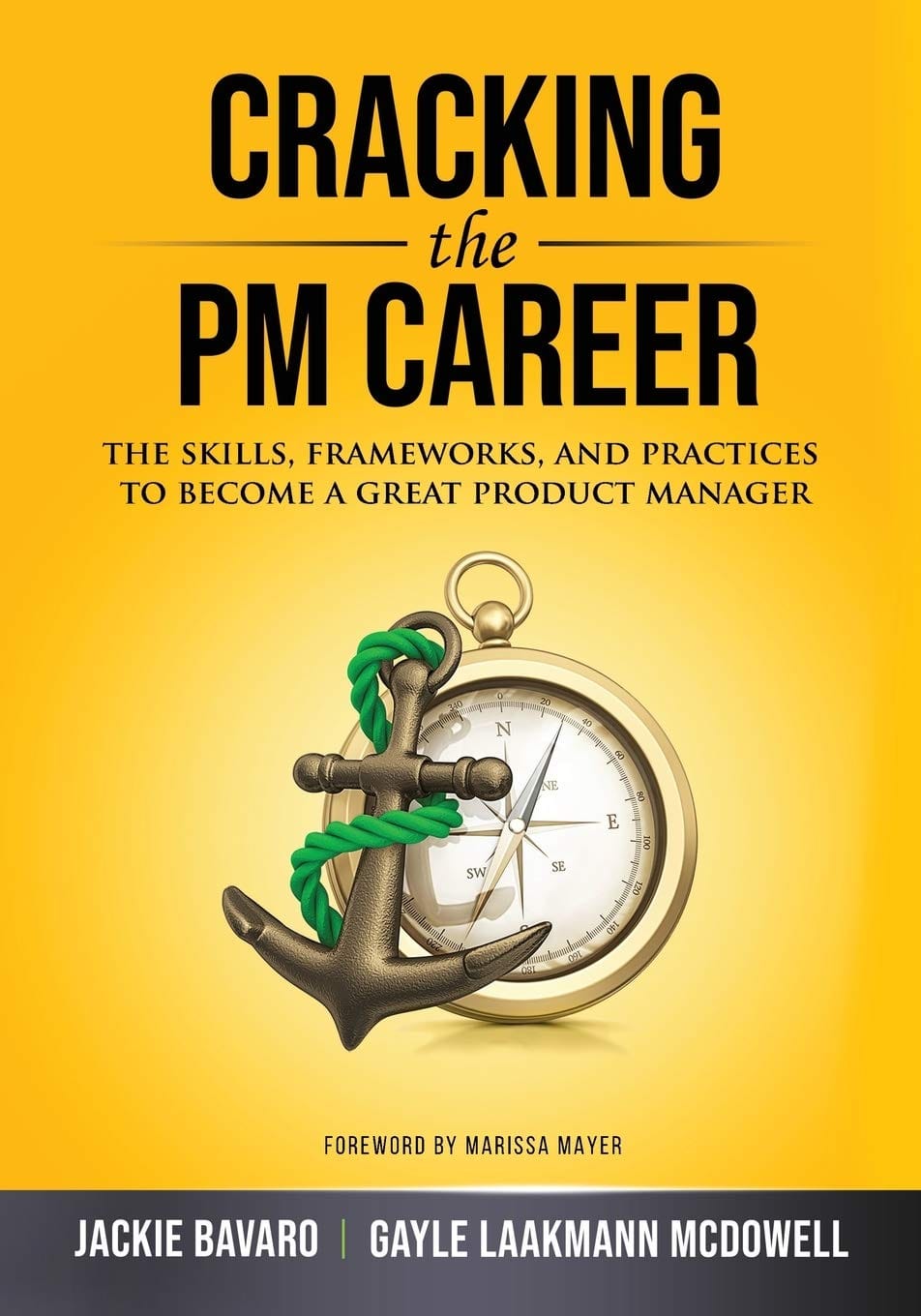
Jackie Bavaro and Gayle Laakmann McDowell's Cracking the PM Career is a comprehensive guide to developing the skills, frameworks, and practices needed to become a great product manager. Unlike their earlier book Cracking the PM Interview, which focused on landing a PM role, this book addresses what happens after you get the job: how do you actually become excellent at product management and build a successful career?
The book's central premise is that product management excellence is learnable. Great PMs aren't born with magical intuition; they develop expertise through deliberate practice, accumulating mental representations that help them recognize patterns and apply appropriate frameworks to new situations. Just as chess grandmasters see board positions rather than scattered pieces, experienced PMs see product challenges as instances of recognizable problem types with known solutions.
Bavaro brings particular credibility to this guidance. As Asana's first product manager and later Head of Product, she grew the PM team from one to over twenty people while helping the company scale from zero to over $100 million in annual recurring revenue. She has worked across consumer, B2B, platform, mobile, and growth PM roles at Google, Microsoft, and Asana. McDowell contributes her expertise in career development and hiring from years of consulting with top tech companies.
The book organizes PM skills into five categories: product skills (understanding users and designing solutions), execution skills (delivering projects effectively), strategic skills (setting direction and optimizing for long-term impact), leadership skills (working well with others and improving teams), and people management skills (for those who manage other PMs). This structure allows readers to focus on areas relevant to their current challenges and career stage.
Throughout, the authors emphasize that product management is a "whitespace" role. PMs are responsible for anything not covered by other team members. The specific responsibilities vary enormously across companies and teams, making adaptability and judgment essential. Frameworks provide structure, but applying them requires understanding context.
The book serves PMs at all levels, from those in their first 90 days through those leading product organizations. It functions both as a cover-to-cover read for comprehensive development and as a reference for specific situations. Each chapter includes responsibilities (what PMs are expected to do), growth practices (how to develop skills over time), and frameworks (mental models and tools for addressing challenges).
High-Level Overview: Key Arguments and Goals
Mental Representations Drive Expertise: Great PMs develop rich mental models that help them quickly recognize problem types and apply appropriate solutions. This expertise comes from deliberate practice, reflection, and exposure to frameworks that organize thinking.
Five Skill Categories: Product management excellence requires developing skills across five domains: product skills for designing great solutions, execution skills for delivering projects, strategic skills for setting direction, leadership skills for working with others, and people management skills for those who lead PM teams.
Frameworks Enable Judgment: The book provides numerous frameworks not as rigid templates but as thinking tools. Applying frameworks requires judgment about which ones fit each situation. Over time, this application becomes intuitive.
Career Progression Is Learnable: Advancing from IC to lead to manager to director follows patterns that can be understood and prepared for. The mystery surrounding career progression can be demystified through understanding what's expected at each level.
Growth Comes from Practice: Reading about frameworks isn't sufficient. Skill development requires application, feedback, and reflection. The book provides growth practices that help PMs continuously improve.
Context Determines Application: Product management looks different at different companies. The book acknowledges this variation while providing principles that transfer across contexts.
Part I: The Product Manager Role
Getting Started
The book opens with a story about Asana's "unicorn celebrations" feature, illustrating how product management requires constant judgment calls that generic advice can't address. Should users see flying unicorns when they complete tasks? The answer depends on understanding users, company values, and countless contextual factors.
Bavaro positions the book as the guide she wished she'd had. Product management lacks the established curricula of fields like engineering or medicine. PMs often learn through trial and error, reinventing wheels that others have already invented. This book aims to accelerate that learning by sharing what experienced PMs have painstakingly discovered.
The authors draw on Anders Ericsson's research on expertise development. Expertise isn't innate talent but accumulated mental representations that help experts recognize patterns invisible to novices. Chess grandmasters don't calculate more moves than amateurs; they see the board differently. Similarly, experienced PMs recognize product challenges as instances of familiar problem types.
The PM Role Defined
Product management defies simple definition because the role genuinely differs across companies. Some PMs work with dedicated researchers, data scientists, and product marketers; others have none of these resources. The PM fills whatever gaps exist on the team.
Despite this variation, common threads emerge. PMs are responsible for shipping great products that solve customer problems and achieve business goals. They work at the intersection of technology, design, and business. They influence without direct authority, coordinating efforts across engineering, design, marketing, and other functions.
The authors group PM skills into five categories:
Product skills help design high-quality products that delight customers. These include user insight, data analysis, analytical problem-solving, product and design skills, technical knowledge, and documentation.
Execution skills enable delivering projects quickly and effectively. These include project management, scoping and incremental development, launch processes, and time management.
Strategic skills improve ability to set direction and optimize for long-term impact. These include product vision, strategy, roadmapping, prioritization, and team goals.
Leadership skills allow working well with others and improving the team. These include personal mindset, collaboration, communication, influence, and mentoring.
People management skills apply when you have responsibility for hiring and developing others. These include coaching, recruiting, creating processes, and organizational design.
The First 90 Days
New PMs face the challenge of ramping up while delivering value. The book provides guidance for navigating this period productively.
Early priorities include understanding the product, users, and business. New PMs should use the product extensively, talk to customers, review existing research, and learn the technical architecture. They should meet key stakeholders, understand organizational dynamics, and identify how decisions get made.
Building relationships matters from day one. Meeting teammates, understanding their perspectives, and establishing trust enables future collaboration. New PMs who isolate themselves miss crucial context and struggle to get things done.
Quick wins build credibility. Finding small improvements that can ship quickly demonstrates competence and builds momentum. These wins don't need to be strategically important; they establish that you can deliver.
The authors caution against common mistakes: moving too fast before understanding context, trying to change everything at once, or waiting too long to contribute. Balance is essential.
Part II: Product Skills
User Insight
User insight forms the foundation of effective product management. PMs who don't deeply understand users build products based on assumptions that may be wrong. Early in her career, Bavaro made costly mistakes by assuming she understood users without actually talking to them.
The book recommends 5-10 live user conversations per project. Live conversations provide depth that surveys and existing research can't match. You absorb emotional impact, ask follow-up questions, and discover unexpected insights. Reading existing research matters too, but it's not a substitute for direct conversation.
User conversations require skill. PMs must dig beyond surface requests to understand underlying problems. Users often ask for specific solutions when they have problems they can't articulate. "Un-translating" these requests to identify root needs enables better solutions.
Building mental models of users helps PMs predict reactions to product decisions. As you talk to users, try to predict what they'll say. Track where your predictions are right and wrong. Over time, this practice builds intuition that guides countless decisions.
Data Insight
Data provides another lens on user behavior and product performance. PMs need sufficient data literacy to analyze usage patterns, run experiments, and make evidence-based decisions.
Key skills include understanding metrics (what to measure and why), analyzing data (extracting insights from numbers), and running experiments (A/B tests and other methods for validating hypotheses). PMs don't need to be data scientists, but they need enough capability to work effectively with data.
The book covers common metrics frameworks, experimental design basics, and pitfalls in data interpretation. Understanding statistical significance, avoiding misleading conclusions, and knowing when data can't answer questions all matter.
Data and user insight complement each other. Data shows what users do; conversations reveal why. Neither alone provides complete understanding.
Analytical Problem Solving
Product managers continuously face ambiguous problems. Recognizing ambiguity and applying structure distinguishes effective PMs from those who feel stuck or defer decisions to others.
The book distinguishes exploratory problems (where you don't know the potential answers) from decision-making problems (where you're choosing among options). Each requires different approaches.
For exploratory problems, structure helps even when the problem is wide open. Breaking large questions into smaller ones, generating hypotheses, and systematically investigating each one prevents aimless wandering.
For decision-making problems, frameworks help evaluate options against criteria. The book provides multiple frameworks for different situations, from simple pros-and-cons lists to more sophisticated approaches.
Product and Design Skills
PMs work closely with designers and need sufficient design literacy to collaborate effectively. This doesn't mean doing design work but understanding design principles, providing useful feedback, and recognizing good design.
The book covers basics of user experience, interaction design, and visual design. PMs should understand how design decisions affect user behavior, what makes interfaces intuitive, and how to evaluate design quality.
Effective PM-designer collaboration requires respecting design expertise while contributing product perspective. PMs bring understanding of user problems, business constraints, and technical feasibility. Designers bring expertise in solutions. The best outcomes come from genuine partnership.
Technical Skills
Technical literacy varies in importance across PM roles. Some positions require deep technical knowledge; others need only basic familiarity. Understanding what level your role requires and developing accordingly matters.
At minimum, PMs should understand how software is built, what makes problems technically difficult, and how to communicate with engineers. Deeper roles may require understanding specific technologies, reading code, or evaluating architectural decisions.
The book provides guidance on building technical knowledge without becoming an engineer. Understanding concepts, learning vocabulary, and asking good questions all improve collaboration with engineering teams.
Writing Product Documentation
Documentation is how PMs communicate plans, rationale, and requirements. Clear documentation aligns teams, prevents miscommunication, and creates records for future reference.
The book covers different document types: product requirements documents, specifications, one-pagers, and others. Each serves different purposes and audiences. Understanding which document type fits each situation matters as much as writing skill.
Good documentation is clear, concise, and appropriate to its audience. Engineers need different detail levels than executives. Adapting documentation to readers improves its effectiveness.
Part III: Execution Skills
Project Management
Project management ensures that teams deliver on time and with quality. While project managers or engineering managers may own formal project management, PMs remain accountable for outcomes. Understanding project management enables PMs to identify problems early and help resolve them.
The book covers project management basics: defining scope, breaking work into tasks, estimating effort, tracking progress, and managing risks. PMs don't need certification-level project management expertise but need enough to oversee delivery effectively.
Agile methodologies receive attention as the dominant approach in software development. Understanding sprints, backlogs, standups, and retrospectives helps PMs participate in team processes and identify when process adjustments would help.
Scoping and Incremental Development
Shipping fast and iterating requires effective scoping. PMs must define minimum viable products that deliver value quickly while leaving room for future enhancement. This requires judgment about what's essential versus nice-to-have.
Incremental development breaks large initiatives into smaller, shippable pieces. Rather than building complete solutions over long timelines, teams deliver partial solutions quickly and improve them based on feedback. This approach reduces risk and accelerates learning.
The book provides frameworks for scoping decisions: identifying core user needs, defining acceptance criteria, distinguishing phases, and planning for iteration. Cutting scope requires saying no to features, which requires confidence in understanding what matters.
Product Launches
Launches represent critical moments that deserve deliberate attention. Successful launches require coordination across teams, clear communication, and preparation for things going wrong.
The book covers launch planning: defining success criteria, coordinating with marketing and support, preparing documentation, planning rollout approaches (big bang versus gradual), and post-launch monitoring.
Post-launch reflection matters as much as the launch itself. What went well? What didn't? What did you learn? Teams that skip retrospectives miss improvement opportunities.
Getting Things Done
Beyond project management, PMs need personal productivity skills to manage their own work effectively. The role involves many competing demands, and managing time and attention determines effectiveness.
The book addresses prioritization (deciding what to work on), time management (allocating attention), and overcoming obstacles (navigating blockers that prevent progress). Practical advice helps PMs handle the volume and variety of demands they face.
Part IV: Strategic Skills
Product Strategy Overview
As PMs advance, strategic responsibilities increase. Early in careers, PMs execute on strategy others set. Later, they shape strategy themselves. Developing strategic skills prepares PMs for this transition.
Strategy involves setting direction that guides decisions. Good strategy helps teams know what to pursue and what to ignore. It provides coherence across many individual decisions.
The book covers how strategy connects to execution. Vision defines long-term direction. Strategy describes how to achieve the vision. Roadmaps translate strategy into near-term plans. Goals measure progress. Each level informs the others.
Vision
Product vision describes the future you're trying to create. Good visions are inspiring, specific enough to guide decisions, and ambitious enough to motivate. They typically look 3-10 years out.
The book provides guidance on crafting visions: understanding company context, identifying differentiation, balancing ambition with credibility, and communicating effectively. Vision statements require iteration to get right.
Strategic Framework
Strategy translates vision into action by identifying key challenges and approaches for addressing them. The book introduces frameworks for strategic analysis: understanding markets, competitors, and company capabilities; identifying strategic options; and making choices.
Good strategy involves tradeoffs. Trying to be everything to everyone produces mediocrity. Effective strategy requires deciding what not to do as clearly as what to do.
Roadmapping and Prioritization
Roadmaps communicate plans to stakeholders. They show what teams intend to build and roughly when. Different audiences need different roadmap views: executives want high-level themes; engineers need tactical detail.
Prioritization frameworks help decide what to build. The book covers various approaches: RICE (Reach, Impact, Confidence, Effort), weighted scoring, opportunity assessment, and others. No framework eliminates judgment, but frameworks structure thinking.
The authors emphasize that roadmaps are communication tools, not commitments. Flexibility to adapt as you learn matters more than hitting predetermined milestones.
Team Goals
Goals align teams around outcomes. OKRs (Objectives and Key Results) and similar frameworks translate strategy into measurable targets that teams pursue.
The book covers goal-setting: defining good objectives, choosing appropriate key results, cascading goals through organizations, and avoiding common pitfalls. Goals should be ambitious but achievable, measurable but not gameable, aligned but not micromanaging.
Part V: Leadership Skills
Personal Mindset
Leadership begins with self-leadership. The book addresses mindset elements that affect PM effectiveness: growth orientation (believing you can improve), ownership mentality (taking responsibility for outcomes), resilience (persisting through setbacks), and learning from feedback.
PMs face frequent ambiguity, criticism, and failure. Mindset determines whether these experiences produce growth or discouragement. Developing psychological resources to handle challenges matters for long-term success.
Collaboration
PMs succeed through others. Collaboration skills determine how effectively PMs work with engineers, designers, and cross-functional partners.
The book covers building relationships, establishing trust, navigating disagreements, and creating environments where collaboration flourishes. Specific guidance addresses working with designers (respecting expertise while contributing product perspective), engineers (providing context and protecting focus time), and executives (communicating appropriately and managing up).
Communication
Communication pervades PM work. Writing documents, running meetings, presenting to stakeholders, and explaining context all require communication skill.
The book addresses different communication contexts: one-on-one conversations, team meetings, executive presentations, and written documents. Each requires different approaches. Adapting to audience, purpose, and context improves effectiveness.
Influencing Without Authority
PMs lack formal authority over most people they work with. Getting things done requires influence: building credibility, making persuasive arguments, and creating alignment without commanding.
The book covers influence tactics: understanding stakeholder perspectives, framing proposals effectively, building coalitions, and navigating disagreement. Influence differs from manipulation; sustainable influence comes from genuinely helping others succeed.
Inspiring and Mentoring
As PMs advance, developing others becomes part of the role. Inspiring teams, mentoring junior PMs, and contributing to broader product culture all matter.
The book provides guidance on motivation (understanding what drives people), mentoring (helping others grow), and contributing to team and organizational health.
Part VI: People Management Skills
Becoming a Manager
People management represents a distinct career path, not just a promotion. The book helps PMs evaluate whether management fits their goals and prepare for the transition if so.
Management involves different work: developing people, setting processes, hiring, and representing the team. Some PMs love this work; others prefer remaining individual contributors. Understanding what management actually involves enables informed decisions.
Management Responsibilities
For those who become managers, the book covers core responsibilities: reviewing work (providing feedback without micromanaging), holding people accountable (addressing performance issues), coaching and development (helping direct reports grow), recruiting and interviewing (building teams), and creating processes (establishing how work gets done).
Each responsibility requires specific skills and approaches. The book provides frameworks and guidance for common management challenges.
Organizational Design
Senior product leaders shape organizational structures. How teams are organized affects what they can accomplish. The book covers organizational design principles: structuring teams around customer value, balancing specialization and coordination, and evolving structures as organizations grow.
Part VII: Careers
Career Ladders and Progression
The book demystifies career advancement by explaining what's expected at different levels. Understanding the criteria for promotion helps PMs focus development appropriately.
Typical PM career ladders progress from Associate PM through PM, Senior PM, Principal/Staff PM to leadership roles like Director, VP, and CPO. Each level involves expanded scope, increased strategic responsibility, and greater organizational impact.
Partnering with Your Manager
Managers significantly affect PM careers. Building productive relationships with managers accelerates growth and opens opportunities. The book covers managing up: understanding your manager's priorities, seeking appropriate feedback, and navigating disagreements.
Choosing Teams and Opportunities
Career decisions involve tradeoffs. The book helps PMs evaluate opportunities: assessing team health, understanding growth potential, considering organizational context, and balancing short-term and long-term factors.
Handling Difficult Situations
Careers include setbacks: poor performance reviews, organizational changes, difficult colleagues, and other challenges. The book provides guidance on navigating these situations constructively.
Career Paths Beyond PM
Product management skills enable various career paths. Some PMs become executives (CPO, CEO). Others move into venture capital, coaching, entrepreneurship, or adjacent fields. The book includes interviews with product leaders who have taken diverse paths.
Part VIII: Product Leader Q&A
The book concludes with in-depth interviews with eleven successful product leaders. These leaders have pursued varied paths: CPO, head of product, CEO, social impact work, venture capital, angel investing, coaching, and starting companies.
The interviews provide real-world perspective on career decisions, leadership challenges, and what success looks like at senior levels. They illustrate how the book's frameworks apply in practice and offer inspiration for readers charting their own paths.
Conclusion: Becoming Great
Cracking the PM Career concludes by returning to its central message: product management excellence is achievable through deliberate development. The frameworks and practices in the book won't transform readers overnight, but consistent application builds expertise over time.
The authors acknowledge that PM work remains challenging regardless of expertise. Products fail. Stakeholders disagree. Priorities conflict. But experienced PMs handle these challenges more effectively, producing better outcomes more reliably.
The path to greatness involves continuous learning. Each project offers opportunities to apply frameworks, receive feedback, and improve. PMs who approach their work as ongoing practice rather than static performance continue growing throughout their careers.
Finally, the book reminds readers that impact matters most. Great PMs ship products that make a difference. Technical skill in frameworks and processes serves this larger purpose. The goal isn't becoming an expert in product management methodology but using that expertise to build things that help people.